













2026 Edition

XV Congress of the Argentine Association for Bioinformatics and Computational Biology (A2B2C)

November 11–12, 2026
In person
IFIBYNE, Ciudad Universitaria, Buenos Aires, Argentina
9:00 - 18:00 hs

About the meeting

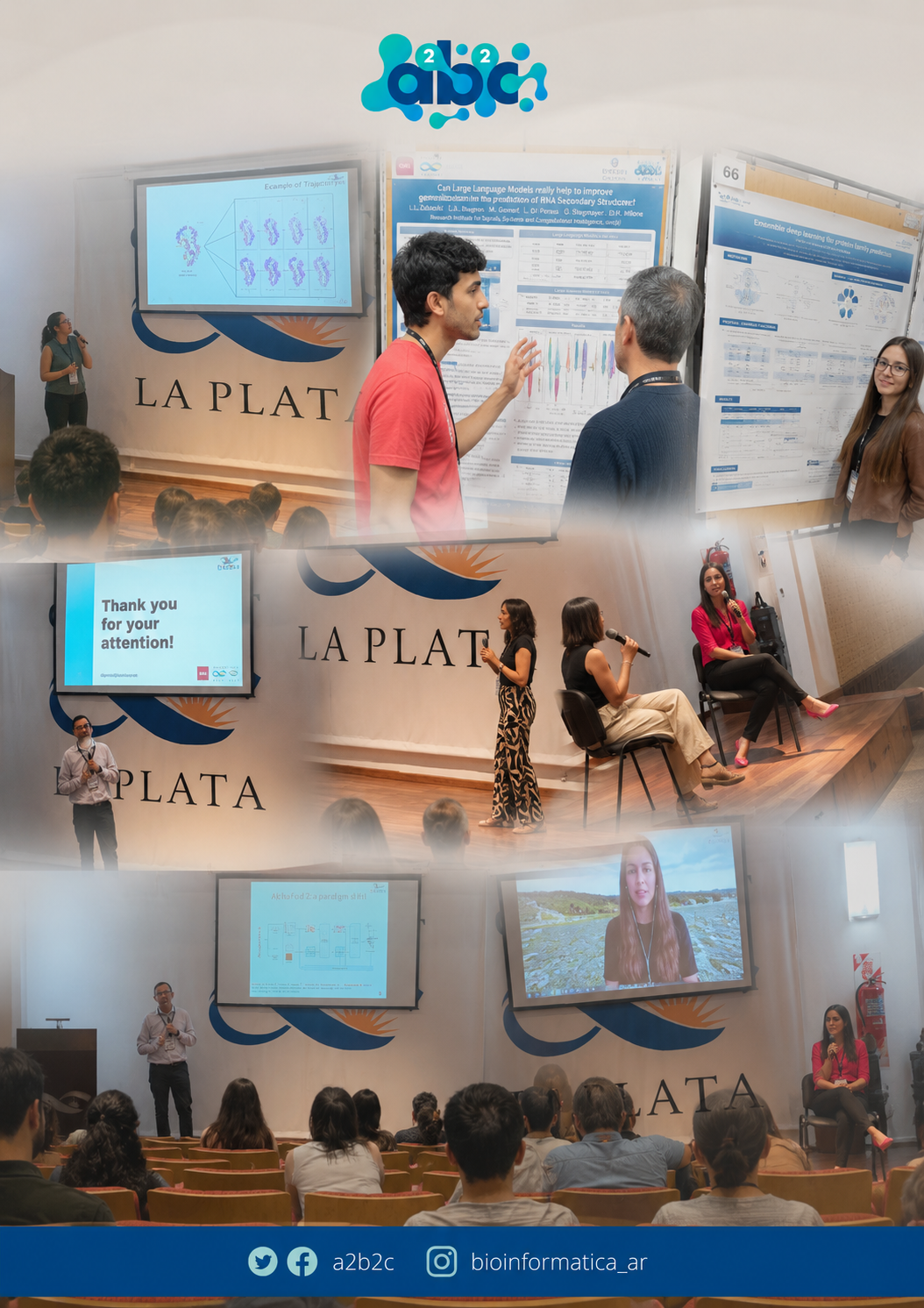
The XV Congress of the Argentine Association for Bioinformatics and Computational Biology (A2B2C) provides a framework to foster the exchange of experiences and initiatives among students, professors, researchers, technicians, and professionals involved in activities related to Bioinformatics and Computational Biology.

Date: November 11–12, 2026

Location: IFIBYNE Auditorium, Ciudad Universitaria, Buenos Aires, Argentina

The plenary lectures and presentations will cover various aspects that bring together the branches of bioinformatics and computational biology with the following thematic tracks:

  • Proteomics and Protein Structure and Function
  • Evolutionary, Comparative and Population Genomics
  • Genomics, Transcriptomics, Epigenomics, Metagenomics
  • Biological Databases and Bioimaging
  • Artificial Intelligence and Systems Biology
  • Education
  • IDPFun2 Special Track

Language: All abstracts and posters must be submitted in English. All oral presentations and plenary talks will be conducted in English.

Key Dates

  • Abstract Submission Opens: August 22
  • Abstract Submission Closes: October 8
  • Announcement of Accepted Abstracts: October 16th
  • Announcement of Selected Short Talks and Fellowships: October 16th
  • Early Registration Deadline: October 22
  • Congress Date: November 11–12, 2026

Co-funded by

IDPFun2 ELIXIR-STEERS European Union co-funding emblem and disclaimer

Sponsored by

Scientific Program

Updated scientific program: November 11–12, 2026 (updated October 30)

Due to the new holidays on November 9th and 10th, we have slightly changed the program.

Workshops: November 13–14, 2026. See the Workshops tab for details.

Download the scientific program (PDF)

November 11, 2026

Venue: IFIBYNE (UBA-CONICET)

TimeActivity
08:00–09:00Registration
09:00–09:15Opening Ceremony
9:15–10:00Opening Keynote Talk: Ana Tereza Ribeiro de Vasconcelos (National Laboratory for Scientific Computing, Brazil)From genomes to knowledge: bioinformatics at national scale in Brazil
10:00–10:15Coffee Break
Session 1: Proteomics and Protein Structure and function
10:15–10:45Invited Speaker: Ariela Vergara Jaque (Facultad de Ingeniería Talca, Chile)Computational strategies for designing modulators of ion channel protein–protein interactions
10:45–11:15Invited Speaker: Miguel Andrade (Johannes-Gutenberg University in Main, Germany)Sequence, context, and AI: studying the functional landscapes of intrinsically disordered regions
11:15–11:55Short talks selected from abstracts (8 min + 2 min questions)
  • Ornella Falduti (IBBM, UNLa Plata, Argentina)
    In silico prediction of (p)ppGpp alarmone binding to DksA and NodD1 in Bradyrhizobium diazoefficiens: a possible link between the stringent response and nodulation gene expression
  • Juliana Glavina (UNSAM, BA, Argentina)
    A Novel Experimentally-derived Dataset for Structural and Sequence Analysis of Disordered Flexible Linkers
  • Exequiel Barrera (IHEM, UNCuyo, Mendoza, Argentina)
    Simulation-guided structural modelling of amyloid-like fibrils. From isolated peptides to nanoscale assemblies
  • Galo Ballati (UNQ, BA, Argentina)
    Molecular dynamics simulations support a dynamic RNA-recognition hotspot in the intrinsically disordered N-terminal domain of the androgen receptor
11:55–12:00Short Break
12:00–12:45Round Table 1: Perspectives of Artificial Intelligence in the life sciences

Chairs: Salvador Capella, Georgina Stegmayer

  • Gabor Erdos (ELTE, Hungary)
  • Jiri Vondrasek (ELIXIR, Czech Republic)
  • Ana Tereza de Vasconcelos (LNCC, Brazil)
  • Henning Hermjakob (EMBL-EBI, UK)
  • Rodrigo Diaz (UNSAM, Argentina)
12:45–14:00Lunch Break
Session 2: Evolutionary, Comparative and Population Genomics
14:00–14:30Invited Speaker: Pierre Luisi (UNC, Argentina)Ancient and present-day genomes in the southern cone: challenges for reconstructing population history
14:30–15:00Invited Speaker: Juliana Vianna (UNAB, Chile)From reference genomes to population genomes: evolution and adaptation of South American and Antarctic vertebrates
15:00–15:45Short talks selected from abstracts (8 min + 2 min questions)
  • Francisco Pisciottano (IBYME-CONICET, Argentina)
    Assessing the Impact of Kinship on Population Genomic Analyses in the Jaguar (Panthera onca)
  • Abril Pagnutti (UNLa Plata, Argentina)
    Protein intrinsic disorder is associated with replicon location in the multipartite prokaryotic genome of Sinorhizobium meliloti
  • Francisco Gonzalez Espinosa (UBA, BA, Argentina)
    Bioinformatics applied to the study of the population dynamics of carbapenem-resistant Klebsiella pneumoniae ST258 in Buenos Aires Hospitals.
15:45–16:00Coffee Break
Session 3: Genomics, Transcriptomics, Epigenetics and Metagenomics
16:00–16:30Invited Speaker: Rodrigo Nores (UNC, Argentina)Paleogenomic Analysis Reveals 8,000 Years of Indigenous Lineage Continuity in Human Populations of Central Argentina
16:30–16:45Invited Speaker: Salvador Capella Gutierrez (BSC, CNS, Spain)ELIXIR: Ten priority areas for AI in life sciences. How do we move forward?
16:45–17:00Invited Speaker: Laura Kamenetzky (UBA, Argentina)Consolidation of a long-read sequencing genomics center in southern South America
17:00–17:45Short talks selected from abstracts (8 min + 2 min questions)
  • Carina Fariñas (IBYME, BA, Argentina)
    Epigenomic and transcription factor profiles distinguish Progesterone Receptor binding sites with and without the canonical motif
  • Bruno Breggia (sinc, UNL, Sta Fe, Argentina)
    An attention-based deep model for RNA secondary structure prediction
  • Luciana Ant (IBYME, BA, Argentina)
    Temporal-spatial genomic regulation of the human endometrium
  • Daniela Orchanski (UNC, Cordoba, Argentina)
    FusionAR-KB: A Multi-Layered Knowledgebase for Transcript-Specific Architecture and Clinical Interpretation of Gene Fusions in Cancer
17:45–17:55Sponsor Talk
17:55–19:30Poster Session
19:30–20:30Welcome Cocktail - Art, Science and Technology Event

November 12, 2026

Venue: IFIBYNE (UBA-CONICET)

TimeActivity
Session 4: Biological Databases and Bioimaging
09:00–09:30Invited Speaker: Henning Hermjakob (EMBL-EBI, UK):The complex portal: from mass spectra to structures
09:30–10:00Invited Speaker: Cristina Marino (F. Leloir, Argentina)Exploring the conformational landscape of the amylome
10:00–10:30Short talks selected from abstracts (8 min + 2 min questions)
  • Martina Ceballos (UC Cordoba, Argentina)
    Computational analysis of human iris colour: from segmentation to quantitative phenotyping
  • Alexander Mulet (UBA, BA, Argentina)
    Automatic segmentation of glioblastoma and its hidden tumor infiltration
  • M. Victoria Nugnes (UPadova, Italy)
    Ordering the Disorder: Updates to the Intrinsically Disordered Proteins Ontology
10:30–10:45Coffee Break
Session 5: Artificial Intelligence and Systems Biology
10:45–11:15Invited Speaker: Silvio Tosatto (U Padova, Italy)The DOME ecosystem: from recommendations to applications in Artificial Intelligence
11:15–11:45Invited Speaker: Juan Cortés (CNRS, France)Generative models for the design of disordered proteins
11:45–12:40Short talks selected from abstracts (8 min + 2 min questions)
  • John Hancock (University of Ljubljana, Slovenia)
    Making Models That Matter: How to Build Trustworthy and Useful Systems Biology Models
  • Ariel Chenomoretz (UBA, F. Leloir, BA, Argentina)
    Network organization of protein binding-site landscapes across scales
  • Leonardo Pedraza (INTECNUS, Rio Negro, Argentina)
    From human DNA to plant regulatory regions: transfer learning with a Genomic Large Language Model
  • Santiago Britez (F. Leloir, BA, Argentina)
    Monosemantic Decomposition of Protein Language Models via Sparse Autoencoders for Interpretable Missense Variant Classification
  • Nicolas Yanovsky (F. Leloir, BA. Argentina)
    When perturbation queries fail: static gene and protein embeddings outperform simulated scFM perturbation responses
12:40–12:45Short Break
12:45–13:30Round Table 2: Leveraging research infrastructures for bioinformatics: the ELIXIR experience

Chairs: Lucía Chemes & John Hancock

  • Jimena Rinaldi (CEBEM & UNSAM, Argentina)
  • Salvador Capella Gutierrez (BSC, Spain)
  • Jiri Vondrasek (ELIXIR, Czech Republic)
  • Anna Strachotova (ELIXIR, Czech Republic)
  • Marcelo Martí (FCEN-UBA, Argentina)
  • Esteban Mocskos (FCEN-UBA, Argentina)
13:30–14:30Lunch Break
Session 6: IDPfun2 Consortium
14:30–15:00Invited Speaker: Gabor Erdos (ELTE, Hungary)A zero-shot thermodynamic potential for protein mutational stability
15:00–15:30Invited Speaker: Nathalie Sibille (CNRS, France)Functional disorder in cell signaling: molecular mechanisms and case studies
15:30–16:15Short talks selected from abstracts (8 min + 2 min questions)
  • Juan Mac Donagh (UNQ, BA, Argentina)
    Transposable elements as evolutionary substrates of protein disorder in the human proteome
  • Heli Garcia Alvarez (UNSAM, BA, Argentina)
    LINKER-Pred: A Deep Learning Method and Web-Server for the Prediction of Disordered Flexible Linkers in Proteins
  • Leandro A. Bugnon (sinc, UNL StaFe, Argentina)
    PonTED: augmenting flexible-linker prediction with protein language models and inter-domain context
  • Marina Navarro (UNQ, BA, Argentina)
    Structural Diversity and Conformational Plasticity of Plantaricin A Variants
16:15–16:30Coffee Break
16:30–18:00Poster Session
18:00–18:45Closing Keynote Talk: Salvador Ventura (UAB, Spain)Targeting protein aggregation at the interface of experiment and computation
18:45–19:15Prizes and Closing Ceremony
19:15–19:30A2B2C meeting - Election & change of Authorities

Confirmed Speakers

Rodrigo F. Díaz
Rodrigo F. Díaz
ITBA / CONICET / UNSAM, Argentina
Round Table 1 panelist

Rodrigo F. Díaz is Associate Dean of the School of Management and Technology at ITBA, Independent Researcher at CONICET, and professor at UNSAM. His research applies statistical and machine learning methods to detect exoplanets in radial velocity data, separating planetary signals from stellar activity. He founded the Bachelor’s in Data Science at UNSAM and led the creation of ITBA’s Master’s in Artificial Intelligence.

Jimena Rinaldi
Jimena Rinaldi
CEBEM / UNSAM, Argentina
Round Table 2 panelist

Jimena Rinaldi is a structural biochemist and group leader of the Photobiology and Optogenetics Laboratory at the Institute of Nanosystems, Universidad Nacional de San Martín (UNSAM), Argentina. She earned her degree in Biological Sciences and her PhD in Biological Chemistry at the University of Buenos Aires, studying the structure of the PKA regulatory subunit. As a postdoctoral fellow and later CONICET researcher at the Instituto Leloir, she focused on how bacteria sense light, uncovering the molecular mechanisms of the Brucella blue-light histidine kinase and of bacteriophytochromes, red/far-red photoreceptors. Her work combines X-ray crystallography, cryo-EM, biochemistry, and spectroscopy. Her lab now also develops optogenetic tools based on bacteriophytochromes to control proteins of biotechnological and clinical interest. She has led national research grants, supervises doctoral and undergraduate students.

Marcelo A. Martí
Marcelo A. Martí
UBA / CONICET, Argentina
Round Table 2 panelist

Marcelo A. Martí holds a PhD from the University of Buenos Aires (UBA), is a Senior Researcher at CONICET and an Associate Professor in the Department of Biological Chemistry at the Faculty of Exact and Natural Sciences, UBA. He also serves as Secretary of Graduate Studies at the faculty. His work focuses on bioinformatics, with applications in protein biochemistry and clinical genomics. He combines molecular simulations and genomic data analysis to study protein function, contribute to drug design, and improve the interpretation of variants associated with rare diseases.

He has authored more than 200 scientific publications and led numerous national and international research projects, with a strong commitment to training researchers. He contributed to the creation of bioinformatics courses and the UBA School of Clinical Genomics. His distinctions include the 2018 Houssay Award and recognition in MIT Technology Review’s TR35 Argentina-Uruguay in 2012. He is a scientific co-founder of Bitgenia, an Argentine genomics and bioinformatics company focused on diagnostic and precision medicine applications.

Esteban Mocskos
Esteban Mocskos
UBA / CONICET, Argentina
Round Table 2 panelist

Esteban Mocskos is an Assistant Professor in the Department of Computer Science at the Faculty of Exact and Natural Sciences, University of Buenos Aires, and an Independent Researcher at CONICET. He directs the Interdisciplinary High-Performance Computing Laboratory (LICAR), whose research spans computer architecture, distributed systems, and large-scale applications.

He participates in the management and operation of HPC infrastructure at the Center for Computational Simulation for Technological Applications (CSC-CONICET), which hosted the TUPAC supercomputer for several years. He currently coordinates the governance committee of Clementina XXI, the high-performance computing system that marked Argentina’s first entry in the TOP500 ranking.

His experience combines the acquisition, administration, and management of high-performance computing systems, the coordination of technical teams, and research in computer architecture and distributed systems.

He has also contributed to the regional and international HPC community as a co-founder and Steering Committee member of CARLA (the Latin American and Caribbean High-Performance Computing Conference) and as General Co-Chair of ISCA 2024, the leading international computer architecture conference, held in Latin America for the first time in its 50 editions.

Rodrigo Nores
Rodrigo Nores
IDACOR / CONICET / Universidad Nacional de Córdoba, Argentina

Rodrigo Nores is a bioanthropologist specializing in paleogenomics. He received his PhD in Chemical Sciences from the Universidad Nacional de Córdoba (UNC) in 2006. He currently works as a CONICET Researcher at the Instituto de Antropología de Córdoba (IDACOR) and is a Full Professor in the Anthropology undergraduate program at the Faculty of Philosophy and Humanities (UNC). His work focuses on reconstructing the evolutionary history of human populations and pathogens in South America through ancient DNA analysis, conducting research in collaboration with international reference centers such as the Department of Genetics at Harvard University and the Max Planck Institute for Evolutionary Anthropology (MPI-EVA).

Silvio C. E. Tosatto
Università degli Studi di Padova, Italy

Full Professor in Bioinformatics and Principal Investigator at the BioComputing UP lab of the Department of Biomedical Sciences, Università degli Studi di Padova. His research focuses on bioinformatics and computational biology, particularly on the structural and mechanistic aspects of complex biological systems.

Salvador Ventura
Salvador Ventura
Universitat Autònoma de Barcelona, Spain

Professor of Biochemistry and Molecular Biology at the Universitat Autònoma de Barcelona. His research focuses on protein structure, protein misfolding, conformational diseases, and the development of therapeutic molecules.

Juan Cortes
Juan Cortes
CNRS, France

Computer scientist specialized in algorithmic robotics and Research Director at CNRS. His interdisciplinary research combines robotics, artificial intelligence, and structural bioinformatics approaches.

Pierre Luisi
Pierre Luisi
CONICET / Universidad Nacional de Córdoba, Argentina

Human Population Geneticist, CONICET Researcher and Full Professor at Universidad Nacional de Córdoba. His research focuses on human population genetics, ancient DNA, population genomics, and the application of bioinformatics and machine learning to evolutionary and biomedical studies.

Miguel A. Andrade-Navarro
Johannes Gutenberg University Mainz, Germany

Professor of Bioinformatics at Johannes Gutenberg University Mainz. His research interests include computational biology, protein and gene function analysis, and data mining approaches in molecular biology.

Henning Hermjakob
Henning Hermjakob
EMBL-EBI, United Kingdom

Leader of the Molecular Systems Cluster at EMBL-EBI. His work focuses on systems biology resources, molecular interaction databases, pathways, and biological data standardization.

Cristina Marino-Buslje
Fundación Instituto Leloir / CONICET / ITBA, Argentina

Principal Investigator at CONICET and Head of the Structural Bioinformatics Unit at Fundación Instituto Leloir. Her research focuses on protein structure and evolution, intrinsically disordered proteins, aggregation, and machine learning applications in bioinformatics.

Nathalie Sibille
Nathalie Sibille
CNRS / University of Montpellier, France

Research Director at CNRS and Team Leader at the University of Montpellier. Trained in Physics and an expert in NMR spectroscopy for Structural Biology, her research focuses on intrinsically disordered proteins (IDPs), post-translational modifications, and the molecular mechanisms regulating GPCR and arrestin interactions.

Gavin Farrell
Gavin Farrell
ELIXIR

Technical Officer at ELIXIR, supporting the activities of the Data, Interoperability and Compute Platforms. He holds a BSc in Biotechnology and an MSc in Biomedical Genomics, with research experience focused on the gut microbiome and colorectal cancer.

John Hancock
John Hancock
ELIXIR

ELIXIR Communities and Services Coordinator. He promotes collaboration between ELIXIR Nodes and the ELIXIR Hub and leads the development of research communities associated with ELIXIR use cases. He has extensive experience in computational biology, bioinformatics leadership, and research infrastructure management.

Gábor Erdös
Gábor Erdös
ELTE, Hungary

Assistant Professor and Principal Investigator at the Department of Biochemistry at Eötvös Loránd University (ELTE), Hungary, where he leads the Protein Dynamics Research Group. Trained as a bioengineer, he holds a PhD in structural biochemistry and has a decade of experience in bioinformatics. His career spans ten years of academic research alongside specialized experience in the pharmaceutical industry, with professional activity in Argentina and extensive collaborations across Europe, particularly in Italy and Israel. His research expertise centers on the characterization of intrinsically disordered proteins through the integration of biophysical concepts and advanced computational approaches. His work focuses on developing novel predictive methods for both general and functional protein disorder, with the goal of bridging artificial intelligence and biophysics. To this end, he employs a broad range of methodologies that includes machine learning, molecular dynamics simulations, and statistical mechanics to investigate the complex behavior and functional roles of intrinsically disordered proteins. He serves as Co-lead of the ELIXIR IDP Community and as the Hungarian Representative for COST. He is also a core member of the ML4NGP COST action, IDP2Biomed twinning project and a contributor of the IDPFun2 project.

Salvador Capella-Gutierrez
BSC / INB–ELIXIR Spain

Salvador Capella-Gutierrez, PhD, leads the Technologies for Biomedical Research Laboratory at the Barcelona Supercomputing Center (BSC), as well as the Coordination team of the Spanish National Bioinformatics Institute (INB). INB is the Spanish node of ELIXIR, the European research infrastructure for life science data. Salvador joined the BSC in July 2017 from the Spanish National Cancer Research Center (CNIO) in Madrid. A bioinformatician with a solid technological background in both Computer Engineering and Health Sciences, Salvador received his PhD in Bioinformatics in 2012, awarded by the Center for Genomic Regulation and Pompeu Fabra University in Barcelona, Spain.

His current focus is on developing long-term infrastructure to facilitate the scientific benchmarking and technical evaluation of research software in Life Sciences, including tools, web services, and workflows. More recently, he is interested in how to further elevate those efforts to continue serving the research community in the fast-evolving AI context.

Ana Tereza de Vasconcelos
National Laboratory of Scientific Computing, Brazil

Researcher at the National Laboratory of Scientific Computing and former President of AB3C. Her work focuses on genomics, metagenomics, transcriptomics, and computational methods for genomics.

Jiri Vondrasek
Jiri Vondrasek
Institute of Organic Chemistry and Biochemistry, Czech Academy of Sciences (IOCB Prague); Head of ELIXIR CZ

Head of the Bioinformatics Group at the Institute of Organic Chemistry and Biochemistry of the Czech Academy of Sciences (IOCB Prague) and Head of ELIXIR CZ. His research focuses on structural bioinformatics, computational structural biology, molecular modeling, protein evolution, and biomolecular interactions.

Ariela Vergara
Ariela Vergara
Universidad de Talca, Chile

Researcher at the Center for Bioinformatics, Simulation and Modeling at Universidad de Talca. Her research focuses on computational structural biology of membrane proteins, molecular modeling, docking simulations, and molecular dynamics.

Workshops

Key Information

ELIXIR-GOBLET TtT Workshop

Schedule: November 13–14, 9:00–17:00. Venue: Cero+Infinito.

This course introduces trainers in the life sciences to learning principles, training techniques, lesson, session, course, and material design as well as assessment and feedback. It offers guidance, ideas and tips for designing, developing and delivering training/teaching activities, all based on research-driven educational principles. Examples and discussions will also focus on the challenges presented by academic teaching. This course has been developed for and by trainers in bioinformatics but is suitable for all trainers and educators in higher education. It is part of the ELIXIR-GOBLET TtT programme.

More information can be found at the following link: Course description.

Registration Deadline: 30/10/2026 or as soon as all slots are filled. Registration is on a first-come first-served basis, although exceptions may be made to ensure diversity and equity.

This course is free of charge for conference attendees who register to the conference.

Requirements: You must be registered for the XV A2B2C conference to participate in this workshop.

Limit: 25 participants.

Notification of acceptance: October 30th, 2026.

To register for the course, please fill the following form:

Valeria Di Cola
Valeria Di ColaSwiss Institute of Bioinformatics (SIB), ELIXIR Switzerland
Short bio

Bioinformatics Training Specialist at the Swiss Institute of Bioinformatics (SIB) and member of ELIXIR Switzerland. She develops bioinformatics training programmes and contributes to the ELIXIR-GOBLET Train-the-Trainer initiative.

Luciana Peixoto
Luciana PeixotoBioData.pt, ELIXIR Portugal
Short bio

Node Coordinator and Training Coordinator of ELIXIR Portugal (BioData.pt), she coordinates national ELIXIR activities and leads training initiatives, contributing to the ELIXIR Training Platform and Train-the-Trainer programme.

Co-funded by the European Union. Views and opinions are those of the author(s) only and do not necessarily reflect those of the European Union or the European Research Executive Agency (REA).
Register for the ELIXIR-GOBLET TtT Workshop

IDPfun2 Workshop 1: Computational Tools for the Prediction of Intrinsic Disorder in Proteins

This session will introduce the concept of Intrinsically Disordered Proteins (IDPs) and explore how modern bioinformatics and AI-based tools can identify and characterize these regions directly from protein sequences. Through accessible examples and practical applications, participants will learn how computational predictions can help us better understand protein function, regulation, and their roles in health and disease.

Schedule: November 13, 9:00–10:30 (1.5 hours). Venue: Cero+Infinito, FCEN-UBA, Ciudad Universitaria, Buenos Aires.

Trainer: Gábor Erdős (ELTE, Hungary). Places: 40.

Requirements: No prerequisites. Computers and internet access will be provided.

Registration deadline: October 30, 2026. Acceptance notification: November 4, 2026.

This course is free of charge for conference attendees who register to the conference.
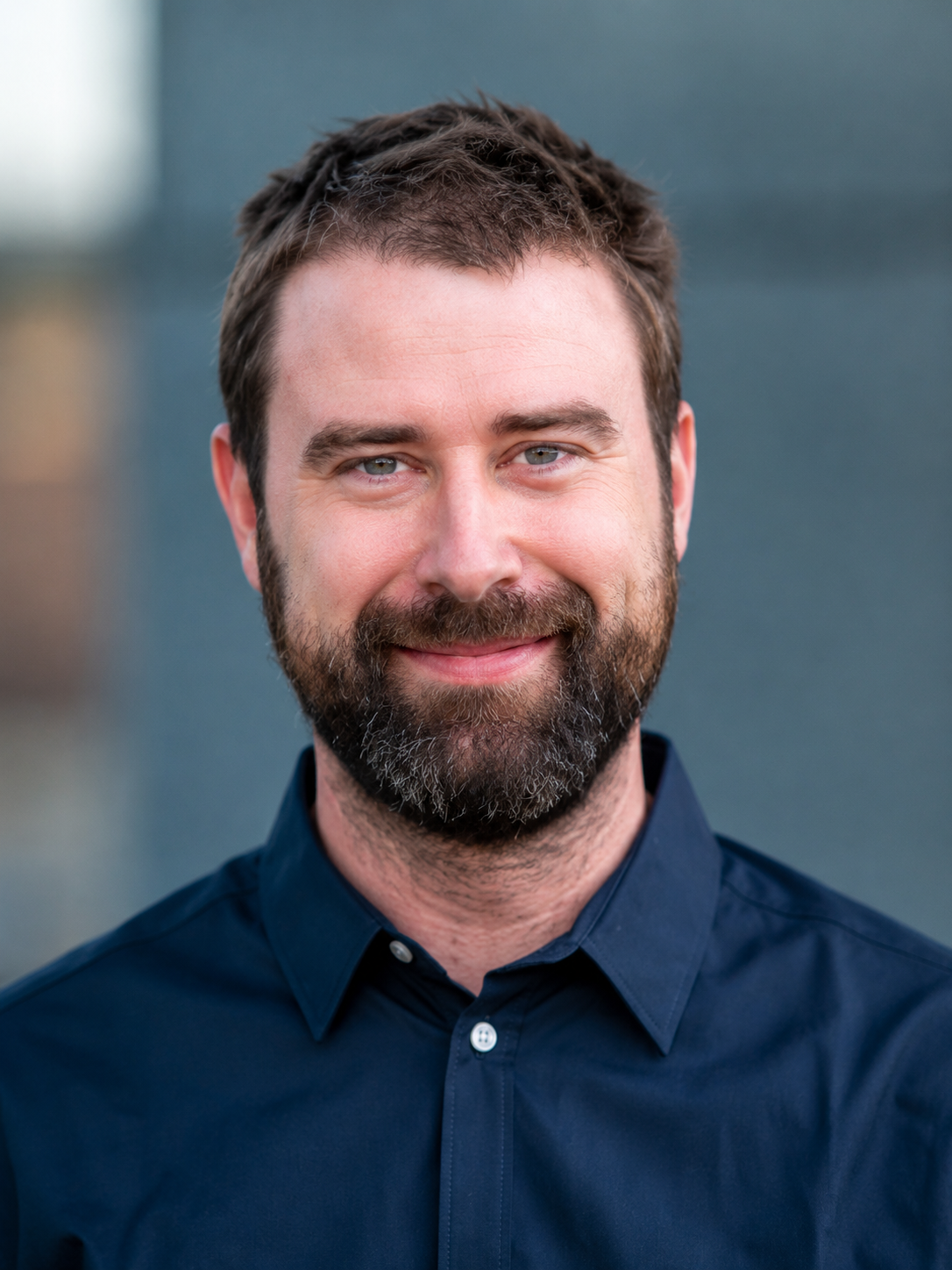
Gábor Erdős
Gábor ErdősELTE, Hungary
Short bio

Gábor Erdős is an Assistant Professor at Eötvös Loránd University (ELTE) and Principal Investigator of the ELTE Protein Dynamics Research Group. His research combines artificial intelligence, biophysics and machine learning to study intrinsically disordered and multistate proteins.

Co-funded by the European Union. Views and opinions are those of the author(s) only and do not necessarily reflect those of the European Union or the European Research Executive Agency (REA).
Register for IDPfun2 Workshop 1

IDPfun2 Workshop 2: Molecular Network Resources of the European Bioinformatics Institute

This workshop will introduce key systems biology resources developed by the Molecular Networks Team at EMBL-European Bioinformatics Institute, in particular the IntAct database of molecular interactions, the Complex Portal, and the Reactome database of biomolecular pathways. It will provide an in-depth view of their content and use, and their connection to Intrinsically Disordered Proteins.

Schedule: November 13, 11:00–12:30 (1.5 hours). Venue: Cero+Infinito, FCEN-UBA, Ciudad Universitaria, Buenos Aires.

Trainers: Henning Hermjakob and Eliot Ragueneau. Places: 40.

Requirements: Basic understanding of protein biology. Computers and internet access will be provided.

Registration deadline: October 30, 2026. Acceptance notification: November 4, 2026.

This course is free of charge for conference attendees who register to the conference.

Henning Hermjakob
Henning HermjakobEMBL-European Bioinformatics Institute
Short bio

Leader of the Molecular Systems Cluster at EMBL-EBI. His work focuses on systems biology resources, molecular interaction databases, pathways, and biological data standardization.

Eliot Ragueneau
Eliot RagueneauBioAIrepo
Short bio

Project Lead of BioAIrepo and former Technical Lead of IntAct, Reactome and Complex Portal. He is thriving at the intersection of biology, development and design.

Co-funded by the European Union. Views and opinions are those of the author(s) only and do not necessarily reflect those of the European Union or the European Research Executive Agency (REA).
Register for IDPfun2 Workshop 2

Language Models Applied to Biological Sequence Analysis

This workshop offers a theoretical and hands-on introduction to the use of language models for biological sequence analysis. We will explore how these models process protein and DNA sequences, identify context-dependent relationships, and generate numerical representations that can be applied to different bioinformatics problems. Through examples and guided exercises, participants will work with sequences, analyze the representations obtained, and interpret their potential applications. Current uses in genomics and proteomics will also be discussed, along with the criteria needed to evaluate results, recognize model limitations, and use these models critically in research contexts.

Schedule: November 13, 9:00–17:00. Venue: Cero+Infinito, Ciudad Universitaria.

Trainers: Clara Campos and Gabriel Iglesias. Places: 40.

Fee: AR$ 60,000 (general registration) or AR$ 30,000 for conference attendees.

Registration deadline: October 30, 2026. Acceptance notification: November 4, 2026.

Clara Campos
Clara CamposIBYME · CONICET
Short bio

Clara Campos is a CONICET doctoral fellow at IBYME, where she studies jaguar genomics and molecular evolution. She teaches programming, data analysis, and artificial intelligence at UBA.

Gabriel Iglesias
Gabriel IglesiasUNQ · UNAHUR · CONICET
Short bio

Gabriel Iglesias holds a PhD from UNQ and is a CONICET associate researcher. He directs UNAHUR’s Molecular Virology Laboratory and teaches bioinformatics at UNQ and UNAHUR.

Register for the Language Models workshop

Abstract Submission

ASSIGNMENT OF DAY OF PRESENTATION FOR POSTERS

XVCAB2C-POSTERDAYassignment.pdf

Abstracts must be submitted as a PDF file including title, full list of authors, and their institutional affiliations and abstract text.

The abstract text (excluding title, authors and affiliations) cannot exceed a maximum of 2500 characters (including spaces). Please ensure your abstract clearly outlines the background, methodology, principal results, and conclusions of your work. Do not include figures, tables, reference lists, or complex formatting. All non-standard abbreviations must be defined upon their first use.

Submit Abstract

Oral Presentation

The oral presentations will be in English in the format of Lightning Talks: 8 min talk + 2 min questions.

Poster Presentation

Poster dimensions: 90 x 120 cm.

Language: All posters must be made in ENGLISH

To participate in the poster award competition the presenting author will have 5 min oral presentation on the date/time of their assigned poster presentation.

Registration Fees

Category Early Registration
(Closes Oct 22nd)
Late Registration
PhD / Master / Postdoc / Student $50.000 $75.000
Researchers & International Students (PhD, Master, Postdoc, Student) $100.000 $150.000
Industry $200.000 $300.000
Registration Form

Committees

Organizing Committee

Chairs

  • Dra. Lucia Chemes | UNSAM-CONICET
  • Dra. Patricia Saragüeta | IBYME-CONICET
  • Dra. Georgina Stegmayer | SINC-UNL–CONICET

Committee members

  • Dra. Juliana Glavina | UNSAM-CONICET
  • Lic. Clara Campos | IBYME-CONICET

Scientific Committee

Committee members

  • Dr. Silvio C. E. Tosatto | Department of Biomedical Sciences, University of Padua, Italy
  • Dr. Gustavo Daniel Parisi | Department of Science and Technology, UNQ-CONICET
  • Dr. Sebastián Fernández Alberti | Department of Science and Technology, UNQ-CONICET
  • Dr. Diego Martín Bustos | IHEM, CONICET-UNCUYO